The Talking Stick App
The Talking Stick App is an anonymous chat platform connecting First Nations with First Nations peers who provide cultural based support and confidential conversations, one on one.
Read More

The Talking Stick App is an anonymous chat platform connecting First Nations with First Nations peers who provide cultural based support and confidential conversations, one on one.
Read More
Native Women’s Association of Canada (NWAC) is a national organization representing Indigenous women, girls, and gender diverse people in Canada and working create an inclusive world for women and families of Indigenous nations. Follow them on Insatgram, Facebook, and Twitter.
Read More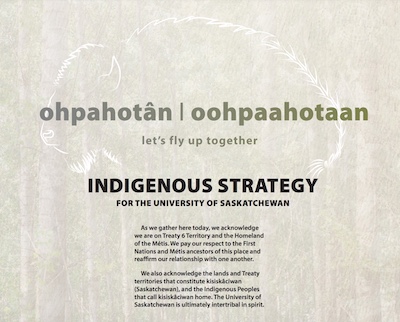
The University of Saskatchewan has shared their Indigenous Strategy online. ohpahotân I oohpaahotaan let’s fly up together, challenges all of us to engage in the difficult work of resetting relationships.
Read More
The Montreal Urban Aboriginal Network launched the Indigenous Ally toolkit in English and in French. Being an ally is about creating safe spaces by educating others on the realities and histories of marginalized people. The toolkit provides suggested steps and self-reflections for people who want to be an ally.
Read MoreIndigenous Works has a framework designed to review your organizational workplace inclusion competencies and build more effective partnerships with Indigenous people, businesses and communities. They also offer Online Training designed to help your entire organization advance Indigenous workplace inclusion.
Read MoreCBC News: “What does Reconciliation Mean to You?”
Reconciliation can mean something very unique to each of us but we need to take the time to listen, learn and share with one another. This CBC article looks at individual reflections and will spark your own reflections!
Read MoreTwo Spirits, One Voice is a community-based initiative that seeks to bolster supports for persons that identify both as LGBTQ and Indigenous: Two Spirit people. Start by watching their 16 minute video!
Read MoreWhite Privilege: Unpacking the Invisible Backpack
This powerful exercise was first published in 1989 by Peggy McIntosh. This link will allow you to download the original article, as well as access useful tools and resources for facilitators. An important step in Reconciliation is recognizing where white privilege exists and working to end inequality.
Read More
Everyone, at some point in their journey of Reconciliation, needs to read the 94 Calls to Action recommended by the Truth and Reconciliation Commission to “redress the legacy of residential schools and advance the process of Canadian reconciliation.” Or connect here to the Truth & Reconciliation Commission Final Report to read other sections and excerpts.
We have included this action in every category and every path on this website as a reminder of how important it is for us to understand the history and path of Reconciliation in our country.
Read MoreFirst Nation Protocol on Traditional Territory
Create safe space in your communication by acknowledging traditional territories in the signature of your emails or correspondence. Indigenous Corporate Training Inc. provides excellent background and information around acknowledging traditional territories.
Read More
Reconciliation in Saskatchewan
Find organizations and communities who share your commitment to work towards Reconciliation and can offer opportunities for engagement.
Read MoreCreating Inclusive Worksites for Aboriginal Workers: A Case for Business outlines the many advantages Canada would be privy to through increased Indigenous inclusion, how instead of making cuts there would be greater benefits to implementing a greater number of employment training programs, and how a greater focus on Indigenous inclusion in the workplace is the solution to Canada needing more taxpaying workers.
Access Indigenous Works has the personnel and online resources/training for your business to analyze your current policies, strategize and implement change to foster Indigenous inclusion.
Read More
Saskatchewan Human Rights Commission: “Erasing Racism”
“Every person is free and equal in dignity and rights” (Section 3, The Saskatchewan Human Rights Code). This article defines and identifies racism, explains how stereotypes, prejudice, and discrimination differ from racism, and discusses how racism can be eradicated.
Read More